
Cefalù: History, Legends, Places and Traditions
A jewel between sea and history, where every stone tells an emotion.
Cefalù, nestled like a queen between the blue of the Tyrrhenian Sea and the majesty of its limestone cliff, is not just a tourist destination. It is a continuous story, a slow heartbeat, a salty caress of the wind on the skin. A place that enters you, silently, and never leaves you.
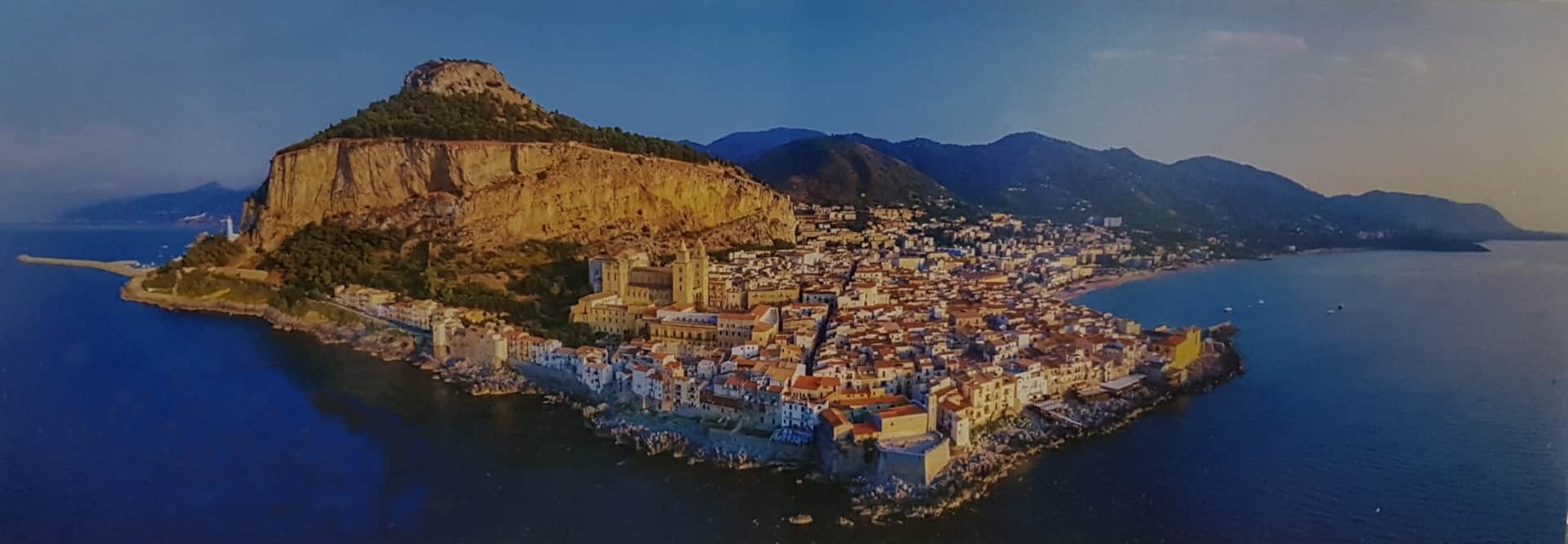
Founded at the end of the 5th century BC, its original name – Kefaloidion, meaning “head” in Greek – is a clear tribute to its Rocca, which rises above the town like an ancient sentinel. It is not just a promontory, but a soul of stone, a meeting point between history and legend.
At its feet lies the medieval core, a harmonious weave of alleys, arches and views that seem suspended in time. The profile of the town, shaped together with the Rocca and the Cathedral, is so unique and recognizable that it evokes the form of a wonderful shell overlooking the sea. Here, every step becomes discovery, every corner an invitation to slow down.
Our suites are located in the heart of this setting, just a few steps from all the main attractions, allowing you to experience Cefalù at every moment of the day, between aimless walks and slow returns home, with the scent of the sea still in the air.
Cefalù is part of the Madonie Park and is included in the club of The Most Beautiful Villages in Italy, a recognition reserved for places that preserve a rare balance between beauty, history and quality of life.
And then there is its Cathedral, with the solemn gaze of the Christ Pantocrator dominating the space and the silence of the Cloister inviting contemplation. Since July 2015, this extraordinary heritage has become part of the Arab-Norman route, recognized by UNESCO as a World Heritage Site — a seal that only confirms what has always been felt here: Cefalù is not visited, it is lived.
🌊 Where myth blends with the sea
Settefrati, seven rocks emerging from the sea like silent guardians. Legend says they are seven brothers turned into stone by the gods as a reward for an act of heroism. Myth? Reality? In Sicily, they often coincide.
Along the coastline, every bay has a name and a story: Aranciotto, Presidiana, Mazzaforno, Settefrati. Places where the water is crystal clear, time seems suspended and the sun reflects on the golden sand like a dream.
🏺 Cefalù is an open-air history manual
Byzantine, Arab, Norman city. Every domination has left living traces: cyclopean walls, remains of temples, architectures that speak Arab-Norman with a Sicilian accent.
Roger II, the visionary king, chose it as a symbol of power and devotion. Surviving a storm at sea, he vowed to build a cathedral. And he kept his promise, turning gratitude into eternal stone.
🧭 What to see in Cefalù: an itinerary of the heart
⛪ The Duomo – Cathedral Basilica of Cefalù: a symphony of stone and light
The Basilica of the Transfiguration, commissioned by Roger II, is an Arab-Norman masterpiece and has been a UNESCO World Heritage Site since 2015.
Two towers rise toward the sky: twin symbols of imperial and papal power.
Inside, the Christ Pantocrator watches you with majesty and gentleness, in a triumph of Byzantine mosaics that illuminate the soul more than the space.
But it doesn’t end there: pink granite naves, a wooden ceiling in Islamic style, Gothic chapels, modern altars, ancient crypts. It is a cathedral that is not visited. It is lived.
🔹 Chiostro del Duomo di Cefalù
A suspended place, where time slows down almost to a halt. The cloister, with its elegant paired columns and finely carved capitals, is one of the most refined examples of Romanesque art in Sicily. Every detail tells symbols, sacred stories and fragments of medieval life. Here, silence is not absence, but a living presence: it invites you to stop, observe, listen.
🔹 The Rocca
For the Phoenicians it was the Promontory of Hercules. Today it is a walk toward the sky. Climb, breathe, look: beneath you the town, the sea, and that eternal feeling only heights can give. At the top, some remains of the "Castle", an ancient Saracen stronghold, and the ruins of the Temple of Diana are still visible.
🔹 The Castle and the Temple of Diana
Two souls – one warrior, the other sacred – at the top of the world. The Temple, dedicated to a water-related divinity, is one of the oldest megalithic sites in Sicily.
🔹 The Megalithic Walls and Porta Marina
Colossal stones, fitted without mortar, form an imposing defensive wall of pre-Hellenic and classical origin in the historic center, standing for millennia. Porta Marina, the only surviving gate, is an open window onto the sea and the past.
🔹 The Bastion of Capo Marchiafava
An urban terrace perfect for those who love silence, wind and the endless blue. On clear days, you can even glimpse the Aeolian Islands.
🔹 The Medieval Washhouse
Among alleys and shade, a staircase descends into the rock. Here, the fresh water of the Cefalino river, which originates in the mountains behind Gratteri, reaches Cefalù through an underground path and at its outlet flows through stone basins and cast-iron lion-head spouts. It is everyday life crystallized in time.
🔹 The Mandralisca Museum
Small but extraordinary. It houses rare shells, coins, antiquities, and the famous “Portrait of an Unknown Man” by Antonello da Messina. That enigmatic gaze is unforgettable. Spectacular is also the “Krater with tuna seller”, an ancient Greek vase with red figures on a black background;
🔹 The Osterio Magno
Not just a palace: it is an ancient presence, carved into the heart of Cefalù. Within walls that span centuries, Norman stone, memory and legend intertwine. Here, where tradition says Roger II of Sicily once lived, time has not passed: it has layered itself. Every arch, every shadow, tells a story that has never truly ended.
🔹 The ancient gates of Cefalù
Ancient passages between town and world, between protection and openness. Porta Pescara (or Porta Marina), facing directly onto the sea, is the most evocative: goods, fishermen and stories entered from here. Porta Terra marked the main entrance from the mainland.
Alongside these, other gates now lost completed the defensive system, such as Porta Ossuna, located in the area of today’s Piazza Cristoforo Colombo.
Crossing them today is like stepping through an invisible threshold between past and present.
🔹 Salvatore Cicero Municipal Theatre
A small 19th-century jewel in the heart of the town. Intimate, elegant, authentic. The Salvatore Cicero Theatre is not just a performance venue, but a living cultural hub where music, theatre and traditions continue to meet. Entering it means experiencing Cefalù in its most refined artistic dimension, away from noise and close to its soul.
🎉 Traditions, folklore and flavors of the sea
👑 Feast of the Most Holy Savior
It is the beating heart of Cefalù’s summer. From August 2 to 6, between faith and celebration, the town lights up with colors, sounds and devotion. Processions, religious ceremonies and popular festivities culminate in fireworks along the seafront in a unique atmosphere where sacred and secular naturally coexist.
⚓ ’Ntinna a Mari
Every August 6, the seafront turns into a spectacle. A greased pole suspended over the sea, a group of young men trying their luck, shouts, laughter, the flag. It is the Feast of the Savior, and it is Cefalù in its purest form.
🐟 The Blue Fish Festival
In September, the sea comes to the table. Anchovies seasoned, grilled, breaded. Simple aromas, authentic flavors, true Sicily. Try the Alici della Duchessa: a recipe that blends sea, land and rural creativity.
🌍 Earth Day Cefalù
A contemporary event that over the years has become an increasingly appreciated occasion. Through excursions, sports activities, cultural initiatives and moments dedicated to sustainability, Cefalù opens up to a different dimension: that of respect and enhancement of the territory.
It is not an ancient tradition, but a tangible sign of how this land continues to evolve while preserving its deep connection with nature.
🌿 The territory: 6,500 hectares of pure beauty
Cefalù is not just sea. It is Madonie, trails, forests, waterfalls and villages. A territory that changes shape, scent and color in every season.
-
Corso Ruggero The daily heartbeat of the town. A street that runs through Cefalù like an invisible thread connecting past and present. Historic buildings, flowered balconies, artisan shops, scents of Sicilian cuisine: here every step is real life, every glance a detail to remember.
-
Piazza Duomo The scenic heart of Cefalù. Spacious, bright, dominated by the majesty of the Cathedral, it invites you to pause. By day it is lively and vibrant, by night it becomes intimate and almost theatrical. Sitting here, even for a few minutes, means tuning into the rhythm of the town.
-
Lungomare Giuseppe Giardina, Mazzaforno, Kalura, Presidiana: different beaches for different tastes, but all with one thing in common: the most beautiful sea there is.
-
Madonie Park A completely different world, just minutes from the sea. Trails immersed in greenery, ancient forests, wildlife and panoramas that stretch to the horizon. This is the most authentic Sicily, less known, made of silence, nature and deep breath.
-
Sant’Ambrogio (seaside village) A small village suspended between sky and sea, a few kilometers from Cefalù. Quiet, authentic, with a breathtaking view. Here time flows more slowly, among stone houses, silence and sunsets that seem painted.
-
Sanctuary of Gibilmanna about 15 kilometers from Cefalù, on the slopes of Pizzo Sant’Angelo, a peak of the Madonie, stands the precious Sanctuary of Gibilmanna. Surrounded by dense vegetation of chestnut, oak and ash trees, this fascinating place of worship and pilgrimage houses a remarkable baroque altar made of finely crafted polychrome marble.
-
Gole di Tiberio An immersive experience in wild nature. Between limestone canyons and the clear waters of the Pollina river, the Gole di Tiberio offer spectacular scenery to explore on foot or by canoe. A still little-known place, perfect for those seeking authentic emotions, far from crowded tourist paths.
💬 Cefalù is lived, not explained
Here everything speaks to you: the stones, the mosaics, the waves, the scent of fresh bread, the cries of fishermen, footsteps in the night.
Cefalù is a return to real things, to a slower rhythm, to a beauty that does not try to please: it simply looks you in the eyes.
✨ Come. Discover. Breathe. Love.
When you leave Cefalù, you will do so with a deep smile and a gentle nostalgia.
Because you don’t just come here on vacation.
You always come back.